Bugatti Veyron
Cost :: $1,700,000
Ferrari Enzo
Cost :: $1,000,000
Pagani Zonda C12 F
Cost :: $741,000
Koenigsegg CCX
Cost :: $600,910
Porsche Carrera GT
Cost :: $484,000
Mercedes SLR McLaren
Cost :: $455,500
Maybach 62
Cost :: $385,250
Rolls-Royce Phantom
Cost :: $320,000
Lamborghini Murcielago
Cost :: $279,900
Aston Martin Vanquish
Cost ::$255,000
Source automotoportal
A blog offering insight on some of the most popular attractions around the world. Created by Kapil Kinger
Wednesday, October 13, 2010
Friday, October 8, 2010
World's Greenest Nations
Yale University's rank of 163 countries according to an environmental performance index (A weighting of carbon and sulfur emissions, water purity and conservation practices)
ICELAND
EPI Score: 93.5/100
Iceland is a European island country located in the North Atlantic Ocean on the Mid-Atlantic Ridge. It has a population of about 320,000 and a total area of 103,000 km2 (39,769 sq mi).The capital and largest city is Reykjavík, with the surrounding areas in the southwestern region of the country being home to some two-thirds of the national population. Iceland is volcanically and geologically active.
Iceland leads the world in addressing pollution control and natural resource management challenges. The nation's top-notch performance derives from its high scores on environmental public health, controlling greenhouse gas emissions, and reforestation, according to a media release from Yale University.
Labels:
AUSTRIA,
COLOMBIA,
COSTA RICA,
Countries,
CUBA,
EPI,
FRANCE,
ICELAND,
MAURITIUS,
NORWAY,
SWEDEN,
SWITZERLAND,
World's Greenest Nations
Thursday, October 7, 2010
Natural wonders of the world
Aurora
Auroras, also known as northern and southern (polar) lights or aurorae (singular: aurora), are natural light displays in the sky, particularly in the polar regions, and usually observed at night. They typically occur in the ionosphere. They are also referred to as polar auroras. This is a misnomer however, because they are commonly visible between 65 to 72 degrees north and south latitudes, which place them a ring just within the Arctic and Antarctic circles. Aurorae do occur deeper inside the polar regions, but these are infrequent and often invisible to the naked eye.
The Grand Canyon
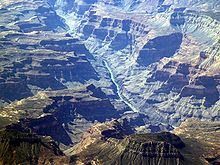
The Grand Canyon is a massive rift in the Colorado Plateau that exposes uplifted Proterozoic and Paleozoic strata, and is also one of the six distinct physiographic sections of the Colorado Plateau province. It is not the deepest canyon in the world (Kali Gandaki Gorge in Nepal is far deeper), nor the widest (Capertee Valley in Australia is about 0.6 mi/1 km wider and longer than Grand Canyon); however, the Grand Canyon is known for its visually overwhelming size and its intricate and colorful landscape. Geologically it is significant because of the thick sequence of ancient rocks that are beautifully preserved and exposed in the walls of the canyon. These rock layers record much of the early geologic history of the North American continent.The Colorado River basin (of which the Grand Canyon is a part) has developed in the past 40 million years.
Grand Canyon National Park is one of the world’s premier natural attractions, attracting about five million visitors per year. Overall, 83% were from the United States: California (12.2%), Arizona (8.9%), Texas (4.8%), Florida (3.4%) and New York (3.2%) represented the top domestic visitors. Seventeen percent of visitors were from outside the United States; the most prominently represented nations were the United Kingdom (3.8%), Canada (3.5%), Japan (2.1%), Germany (1.9%) and The Netherlands (1.2%).
Aside from casual sightseeing from the South Rim (averaging 7,000 feet [2,100 m] above sea level), rafting, hiking, running and helicopter tours[36] are especially popular. In October 2010 the North Rim is the host to an ultramarathon. The Grand Canyon Ultra Marathon is a 78-mile (126 km) race over 24 hours. The floor of the valley is accessible by foot, muleback, or by boat or raft from upriver. Hiking down to the river and back up to the rim in one day is discouraged by park officials because of the distance, steep and rocky trails, change in elevation, and danger of heat exhaustion from the much higher temperatures at the bottom. Rescues are required annually of unsuccessful rim-to-river-to-rim travelers. Nevertheless, hundreds of fit and experienced hikers complete the trip every year.
Auroras, also known as northern and southern (polar) lights or aurorae (singular: aurora), are natural light displays in the sky, particularly in the polar regions, and usually observed at night. They typically occur in the ionosphere. They are also referred to as polar auroras. This is a misnomer however, because they are commonly visible between 65 to 72 degrees north and south latitudes, which place them a ring just within the Arctic and Antarctic circles. Aurorae do occur deeper inside the polar regions, but these are infrequent and often invisible to the naked eye.
The Grand Canyon
The Grand Canyon is a massive rift in the Colorado Plateau that exposes uplifted Proterozoic and Paleozoic strata, and is also one of the six distinct physiographic sections of the Colorado Plateau province. It is not the deepest canyon in the world (Kali Gandaki Gorge in Nepal is far deeper), nor the widest (Capertee Valley in Australia is about 0.6 mi/1 km wider and longer than Grand Canyon); however, the Grand Canyon is known for its visually overwhelming size and its intricate and colorful landscape. Geologically it is significant because of the thick sequence of ancient rocks that are beautifully preserved and exposed in the walls of the canyon. These rock layers record much of the early geologic history of the North American continent.The Colorado River basin (of which the Grand Canyon is a part) has developed in the past 40 million years.Grand Canyon National Park is one of the world’s premier natural attractions, attracting about five million visitors per year. Overall, 83% were from the United States: California (12.2%), Arizona (8.9%), Texas (4.8%), Florida (3.4%) and New York (3.2%) represented the top domestic visitors. Seventeen percent of visitors were from outside the United States; the most prominently represented nations were the United Kingdom (3.8%), Canada (3.5%), Japan (2.1%), Germany (1.9%) and The Netherlands (1.2%).
Aside from casual sightseeing from the South Rim (averaging 7,000 feet [2,100 m] above sea level), rafting, hiking, running and helicopter tours[36] are especially popular. In October 2010 the North Rim is the host to an ultramarathon. The Grand Canyon Ultra Marathon is a 78-mile (126 km) race over 24 hours. The floor of the valley is accessible by foot, muleback, or by boat or raft from upriver. Hiking down to the river and back up to the rim in one day is discouraged by park officials because of the distance, steep and rocky trails, change in elevation, and danger of heat exhaustion from the much higher temperatures at the bottom. Rescues are required annually of unsuccessful rim-to-river-to-rim travelers. Nevertheless, hundreds of fit and experienced hikers complete the trip every year.
Monday, October 4, 2010
CWG 2010 Opening Ceremony delhi
AWSOME
SADDA SHERA
DHUM DHUM
JADU
SHERA KA BALEE BALLE
About 1,200 moving lights, 25 stacks of speakers and about 2,700 shots of fireworks spread across the roof of the Jawaharlal Nehru stadium combined with a stage weighing 500 tonnes to create a spectacular opening ceremony of the Commonwealth Games here today. The gigantic main stage, inspired by the ''mandala'', a sanskrit word for the geometric designs symbolic of the universe in Hinduism and Buddhism, which is one of the largest built for an opening and closing ceremony.
Subscribe to:
Posts (Atom)